
- Home /
- Marine Electronics & Raymarine /
- Maretron /
- Digital Switching Platform /
- 12 Channel DC Load Controller Module
Shop Now
- Batteries
- Boat Hardware
- Comfort
-
Electrical
- Battery Switch
- Busbars, Terminals & Insulators
- Cable Management
- Circuit Breakers
- Deck Seals
- Electrical Panels
- Electrolysis Protection
- Engine Instruments
- Fuses & Fuse Blocks
- Heat Shrink
- Horns
- Meters
- Plugs & Sockets
- Single & Multi-Core Cables
- Switches
- Terminals & Crimps
- Tank Senders
- Accessories, Upgrades & Spares
-
Marine Electronics & Raymarine
- Antennas
- Autopilots
- Axiom Range
- Digital Switching
- Electronic Charts
- Element Series
- Fishfinder/Sonar Modules
- Instruments
- Internet
- Maretron
- Marine AIS Devices
- Marine Cameras
- Mounting Systems
- Networking & Cables
- NMEA Converters & Sensors
- Radar
- Satellite TV
- Thermal Cameras
- Transducers
- VHF Radios
- Accessories, Upgrades & Spares
- Marine Lighting
- Power Generation & Management
- Propulsion & Around The Engine
- Pumps
- Safety Solutions
- Sanitation & Tanks
- Steering Control & Trim
- Tenders & Inflatables
- Vessel Manoeuvring Systems
- Watermakers
- Winches & Cranes
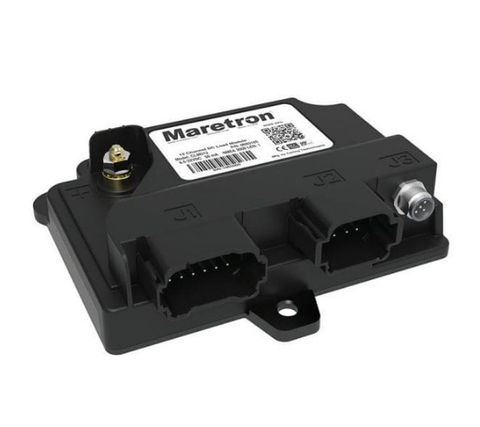
12 Channel DC Load Controller Module
Designed for vessels of all sizes with smaller loads, the CLMD12 is a compact 12-Channel DC Load Controller Module. Two of the 12 breakers handle a maximum of 12 amps, six handle a maximum of 10 amps and four handle a maximum of 5 amps with a total current capacity of 75 amps. Additionally, like circuits can be paralleled.
If a smaller circuit needs to be protected, each of the 12 breakers can be set to trip at lower current levels. In addition, the CLMD12 has inputs for up to 7 hard-wired switches that can be used to switch breaker states, or as inputs for other data such as bilge alarms or hatch positions, etc.
The CLMD12 handles many DC load types such as lights, pumps, motors, and electronics. An added benefit of the CLMD12 is that it reports the current through each of the 12 breakers. This allows you to determine if loads are drawing too much or too little electrical current. This information can be used to report over current faults and undercurrent conditions.